
What Is the Average Settlement for a Rear-End Collision?


What Is the Average Settlement for a Rear-End Collision?
If you have been injured in a crash, one of the first questions that may come to mind is: what is the average settlement for a rear-end collision? While it is natural to look for a number, the reality is that every case is different.
The value of a settlement depends on the severity of the injuries, the financial losses involved, and how the accident has affected your daily life.
Understanding how personal injury settlements are calculated and the factors that influence compensation can help you set realistic expectations and protect your legal rights. Below, we explain what determines the value of a rear-end collision claim, how much your personal injury case is worth, and what to do after a car accident to strengthen your claim.
If you need a personal injury attorney, call us at (619) 746-8879
Key Takeaways
- The average settlement for a rear-end collision varies widely because each claim depends on the injuries, medical expenses, lost income, and other case-specific factors.
- Understanding how personal injury settlements are calculated helps accident victims evaluate insurance offers and pursue fair compensation.
- Knowing what to do after a car accident, including seeking medical care and preserving evidence, can strengthen your personal injury claim.
Is There an Average Settlement for a Rear-End Collision?
Many people search for the average settlement for a rear-end collision hoping to find a specific dollar amount. However, there is no universal average because settlements vary significantly based on the facts of each case.
Some claims involving minor vehicle damage and soft tissue injuries may settle for a few thousand dollars, while cases involving severe injuries, surgeries, permanent disabilities, or long-term medical treatment can result in settlements worth tens or even hundreds of thousands of dollars.
Rather than focusing on averages, it is more helpful to understand the factors that determine the value of your individual claim.
How Are Personal Injury Settlements Calculated?
One of the most common questions accident victims ask is, how are personal injury settlements calculated?
Insurance companies and attorneys typically evaluate several types of damages, including:
Medical Expenses
Compensation often includes:
- Emergency room visits
- Ambulance transportation
- Hospital stays
- Surgery
- Prescription medications
- Physical therapy
- Chiropractic care
- Future medical treatment
If your injuries require ongoing care, those anticipated costs may also be included in your claim.

Lost Income
If your injuries prevented you from working, you may recover compensation for:
- Lost wages
- Missed bonuses or commissions
- Reduced earning capacity
- Future loss of income
Property Damage
Your settlement may also include compensation for repairing or replacing your vehicle and other personal property damaged in the collision.
Pain and Suffering
Unlike medical bills, pain and suffering damages are more subjective. They consider:
- Physical pain
- Emotional distress
- Anxiety
- Depression
- Loss of enjoyment of life
- Permanent disability or disfigurement
The more severe and long-lasting the injuries, the greater these damages may be.
Comparative Fault
In some states, your compensation may be reduced if you are found partially responsible for the accident. Although rear-end collisions are often caused by the driver who strikes the vehicle in front, liability is not always automatic.

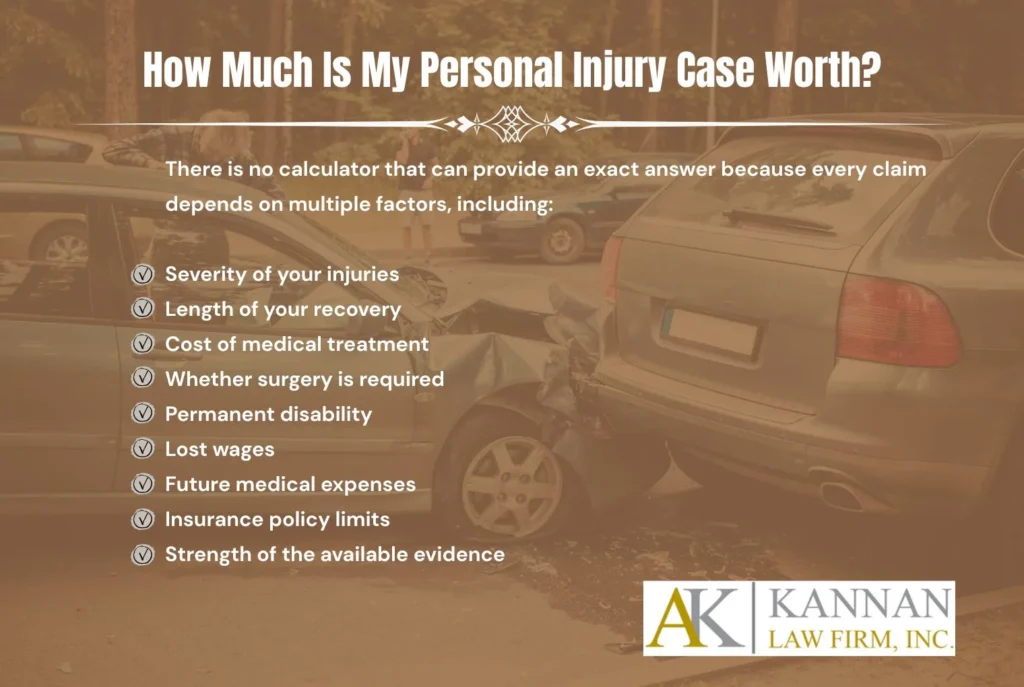
How Much Is My Personal Injury Case Worth?
After an accident, many people wonder, “how much is my personal injury case worth?”
There is no calculator that can provide an exact answer because every claim depends on multiple factors, including:
- Severity of your injuries
- Length of your recovery
- Cost of medical treatment
- Whether surgery is required
- Permanent disability
- Lost wages
- Future medical expenses
- Insurance policy limits
- Strength of the available evidence
Cases involving traumatic brain injuries, spinal cord damage, broken bones, or permanent impairments generally result in higher settlements than cases involving temporary soft tissue injuries.
An experienced personal injury attorney can evaluate these factors and provide a more accurate estimate of your claim’s value.
Common Injuries in Rear-End Collisions
Rear-end accidents frequently cause injuries such as:
- Whiplash
- Neck injuries
- Back injuries
- Herniated discs
- Concussions
- Shoulder injuries
- Knee injuries
- Facial injuries from airbags
- Wrist and hand fractures
Even crashes that occur at relatively low speeds can result in significant injuries that require months of treatment.

What to Do After a Car Accident
Knowing what to do after a car accident can protect both your health and your legal claim.
Seek Medical Attention Immediately
Some injuries, including concussions and whiplash, may not produce symptoms right away. A prompt medical evaluation creates documentation that connects your injuries to the accident.
Call the Police
A police report often becomes one of the most important pieces of evidence during settlement negotiations.
Gather Evidence
If possible:
- Take photographs of the vehicles
- Document the accident scene
- Obtain witness contact information
- Exchange insurance information with the other driver
Avoid Giving Recorded Statements
Insurance adjusters may ask for a recorded statement shortly after the crash. Before discussing fault or accepting any settlement offer, consider speaking with a personal injury attorney.
Keep All Records
Maintain copies of:
- Medical bills
- Medical records
- Prescription receipts
- Repair estimates
- Wage loss documentation
These records help establish the full value of your damages.
Why Insurance Companies Often Offer Low Initial Settlements
Insurance companies are businesses focused on minimizing claim payouts. Their initial settlement offer may not fully account for:
- Future medical treatment
- Ongoing pain and suffering
- Long-term disabilities
- Lost earning capacity
Accepting an early offer may prevent you from seeking additional compensation later, even if your injuries become more serious than initially expected.
Why Legal Representation Can Make a Difference
An experienced personal injury attorney understands how personal injury settlements are calculated and knows how to gather evidence, negotiate with insurance companies, and accurately value both current and future damages.
Legal representation may be particularly important if:
- Liability is disputed
- You suffered serious injuries
- Multiple vehicles were involved
- The insurance company denies your claim
- You receive a low settlement offer
An attorney can advocate for compensation that reflects the full impact of your injuries rather than simply accepting the insurer’s initial valuation.
Contact Kannan Law for a free initial consultation if you have been in a car accident or have suffered personal injuries. Call us at (619) 746-8879.
Final Thoughts
There is no single average settlement for a rear-end collision because every accident is unique. The value of your claim depends on the severity of your injuries, your financial losses, your future medical needs, and many other factors.
If you are asking, how much is my personal injury case worth, the best approach is to have your case evaluated individually. Understanding how personal injury settlements are calculated and knowing what to do after a car accident can significantly improve your chances of recovering fair compensation and moving forward after an unexpected collision.
Frequently Asked Questions
Can I receive compensation even if my injuries appear minor?
Yes. Injuries like whiplash or soft tissue damage may worsen over time. Even seemingly minor injuries can require ongoing treatment and may qualify for compensation.
How long does it take to settle a rear-end collision claim?
The timeline depends on factors such as the severity of the injuries, whether liability is disputed, and whether a lawsuit becomes necessary. Some claims settle within a few months, while more complex cases may take a year or longer.
Should I accept the insurance company’s first settlement offer?
Not necessarily. Initial offers are often lower than the full value of a claim. Before accepting any settlement, it is wise to understand the extent of your injuries. Also, remember to consult with a personal injury attorney to determine whether the offer adequately covers your damages.