
What to do if you received a NOID, Notice of Intent to Deny your immigration application?


What to do if you received a NOID, Notice of Intent to Deny your immigration application?
At Kannan Law, we have seen many instances where people come to our office with a Notice of Intent to Deny, also known as NOID, and a short 30-day deadline to respond. This is a formal warning from the USCIS that your immigration petition or application is at risk of being rejected.
So, what can you do if you receive this notice or are there any steps to take to ensure that your application doesn’t get denied?
If you have questions about adjusting your immigration status, call us today at (619) 746-8879
Key Takeaways
- A NOID is a serious warning, not a final denial: Receiving a Notice of Intent to Deny means USCIS has identified significant concerns with your application, but you still have an opportunity to respond and potentially save your case.
- A strategic response requires more than additional paperwork: The most effective responses directly address each issue raised by USCIS and often include legal arguments, supporting documentation, and explanations that clarify inconsistencies or concerns.
- Certain cases may require additional immigration relief: If USCIS alleges fraud, misrepresentation, or other inadmissibility grounds, applicants may need to pursue waivers such as Form I-601 in addition to responding to the NOID.
Why do people receive a NOID?
Common reasons for a NOID include insufficient evidence for your immigration case or failure to meet the specific legal requirements for the requested benefit. Other possibilities include discrepancies or contradictions between submitted forms, interview answers, or past records.
Derogatory information (negative background details or prior immigration violations) uncovered by USCIS, or if the person prepared their application by themselves and made important mistakes, can lead to a NOID.
Due to the current political climate, USCIS is scrutinizing adjustment of status cases where the beneficiary overstayed his/her visa. During the interview, the beneficiary’s testimony gave USCIS grounds to determine fraud was committed.
This can include misuse of the beneficiary’s visa and previous testimony given to obtain a tourist visa. Based on this determination, USCIS issued a Notice of Intent to Deny (“NOID.”)
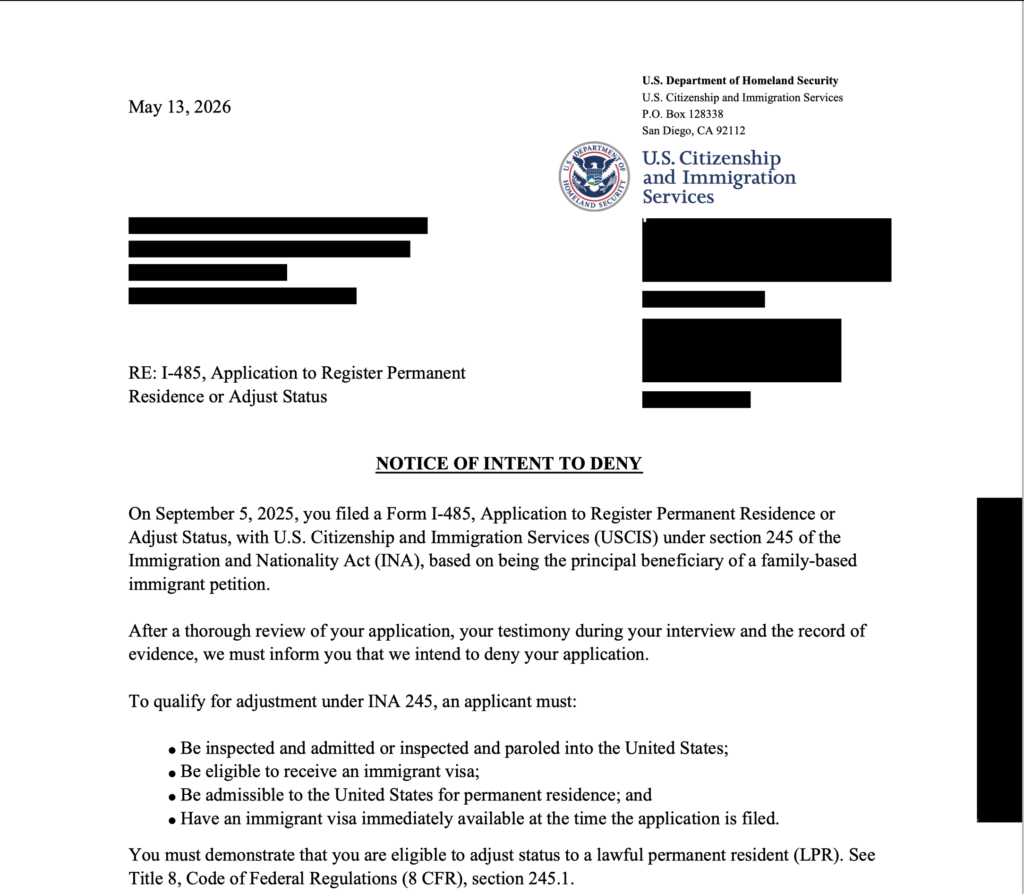
Unlike a Request for Evidence (RFE) which simply asks for missing documents, a NOID means USCIS has found major issues and intends to deny your case unless you can successfully overcome their objections.
Key actions to take immediately if you received a NOID
Do not panic, but act quickly: A NOID is not a final denial, but it is the last chance to save your case. Here are some guidelines to follow:
- Identify the deadline: Carefully read the notice to find your exact deadline. You typically have 30 to 33 days to respond. Missing this deadline results in automatic denial.
- Consult an attorney: Because a NOID represents a high-risk situation, it is highly recommended to seek guidance from a qualified immigration attorney to craft a strong legal defense and organize the necessary evidence.
How to respond to a Notice of Intent to Deny
The NOID will clearly state the specific legal and factual reasons why USCIS plans to deny the case. We suggest you collect strong documentation (such as financial records, tax documents, or expert affidavits) to refute USCIS’s claims or prove your eligibility.
Then, submit a comprehensive response. It must address every single objection raised in the notice by the stated deadline. Sending the exact same evidence you originally submitted is insufficient.
How Kannan Law can help in the case of a NOID
In one instance, an individual who received this type of NOID hired our firm. Our approach to the case was two-fold. One aspect was preparing an I-601 waiver requesting the fraud ground be waived and we simultaneously responded to the local field office’s NOID.
In these cases, we need to illustrate the client’s qualifying relative (US Citizen or Lawful Permanent Resident parent or spouse) will suffer an extreme hardship if the beneficiary is forced to return to his/her home country without the qualifying relative or if both the qualifying relative and the beneficiary are forced to live in the beneficiary’s home country.
We have had successful outcomes in cases like these so if you receive a notice like this, give us a call. We offer a free initial phone consultation and we serve the San Diego area in California.

In Summary
Receiving a Notice of Intent to Deny (NOID) can be stressful, but it does not mean your immigration case is over. A NOID provides an opportunity to address USCIS concerns, submit additional evidence, and present legal arguments supporting your eligibility for the requested benefit.
Because the consequences of a denial can be significant, it is important to review the notice carefully, meet all deadlines, and develop a thorough response that directly addresses every issue raised. With the right strategy and supporting documentation, many applicants are able to overcome a NOID and continue pursuing their immigration goals.
Frequently Asked Questions
Can I submit new evidence after responding to a NOID?
Generally, USCIS expects you to include all relevant evidence with your NOID response. While USCIS may accept additional evidence in some situations, there is no guarantee it will be considered. It is best to submit a complete and well-documented response by the deadline.
Will a NOID affect future immigration applications?
A NOID itself does not automatically harm future applications. However, if the case is ultimately denied based on findings such as fraud, misrepresentation, or ineligibility, those findings could impact future immigration benefits and may need to be addressed in subsequent filings.
Can I travel outside the United States while a NOID is pending?
Traveling while a NOID response is pending can be risky, especially if you have a pending adjustment of status application. Departure from the United States may be considered abandonment of certain applications unless you have appropriate travel authorization. You should consult an immigration attorney before making travel plans.