
USCIS Citizenship Changes 2026: What Naturalization Applicants Should Know About Neighborhood Investigations and Home Visits


USCIS Citizenship Changes 2026: What Naturalization Applicants Should Know About Neighborhood Investigations and Home Visits
Updated August 2026

U.S. Citizenship and Immigration Services (USCIS) has issued new guidance reinforcing the use of neighborhood investigations for certain applicants seeking U.S. citizenship.
On August 25, 2026, USCIS issued Policy Alert PA-2026-10, Investigations and Examinations for Naturalization Eligibility. The new guidance incorporates neighborhood investigations into the USCIS Policy Manual and provides immigration officers with another method of verifying whether an applicant qualifies for naturalization.
For lawful permanent residents preparing to file Form N-400, Application for Naturalization, the change makes it more important than ever to carefully review your immigration history, residence history, employment, travel, criminal history, and other information before applying for citizenship.
If you have questions about adjusting your immigration status, call us today at (619) 746-8879
Key Takeaways
- USCIS citizenship changes may include conductions of neighborhood investigations during the naturalization process. The August 2026 policy update reinforces USCIS’s ability to independently verify information about an applicant’s residence, employment, good moral character, and eligibility for citizenship.
- A neighborhood investigation does not mean every applicant will receive a home visit. USCIS determines on a case-by-case basis whether additional investigation is necessary, which could potentially involve neighbors, employers, coworkers, or others familiar with the applicant.
- Applicants should thoroughly review their immigration history before filing Form N-400. Address and employment history, international travel, criminal records, taxes, prior immigration filings, and other inconsistencies can affect naturalization eligibility, making careful preparation especially important for applicants with complicated histories.
Is USCIS Really Conducting Neighborhood Visits for Citizenship Applicants?
Potentially, yes—but this does not mean USCIS will visit the home or neighborhood of every person who applies for citizenship.
Federal immigration law has long authorized USCIS to conduct personal investigations of naturalization applicants. Under Section 335(a) of the Immigration and Nationality Act
(INA), the government may conduct an investigation of an applicant before naturalization.
For decades, however, the government generally waived neighborhood investigations. USCIS ended that general waiver in 2025.
The August 25, 2026 policy update now incorporates the agency’s approach into its formal Policy Manual and reinforces the government’s ability to use neighborhood investigations when determining whether an applicant meets the requirements for U.S. citizenship.
USCIS officers retain discretion to determine whether a neighborhood investigation is appropriate in an individual case.

What Is a USCIS Neighborhood Investigation?

A neighborhood investigation allows USCIS to obtain information beyond what an applicant provides on the N-400 and during the naturalization interview.
Depending on the circumstances, USCIS may seek information relating to an Applicant’s:
- Residence and physical presence in the United States;
- Employment history;
- Good moral character;
- Attachment to the principles of the U.S. Constitution;
- Eligibility for naturalization; and
- Accuracy of information provided to USCIS.
The purpose is essentially to independently verify whether the information provided by the applicant is accurate and whether the applicant satisfies the legal requirements for Naturalization.
Does This Mean USCIS Can Come to My House?
The possibility of a neighborhood investigation should not be confused with a rule requiring a home visit for every citizenship applicant. USCIS has not announced that every N-400 applicant will receive a home visit. Instead, the agency may determine on a case-by-case basis that additional investigation is warranted. That could potentially involve inquiries concerning the applicant’s residence, neighborhood, workplace, or other individuals who have knowledge about the applicant.
Applicants should therefore avoid assuming that the naturalization process will always be limited to submitting the N-400, completing biometrics, and attending the citizenship Interview.
Why Did USCIS Bring Back Neighborhood Investigations?
USCIS initially announced the resumption of personal investigations in 2025 after the practice had generally been waived for decades.
According to USCIS, neighborhood investigations can help officers determine whether applicants satisfy the statutory requirements for naturalization.
The August 2026 update demonstrates that USCIS intends to continue using these investigations as part of its naturalization adjudication process.
The change is also consistent with a broader trend toward increased scrutiny of citizenship applications and closer examination of whether applicants satisfy all requirements for naturalization.

What Could USCIS Be Looking For?
One of the most important lessons from the new policy is that information on an N-400 should be accurate, complete, and consistent with the applicant’s immigration history and other government records.
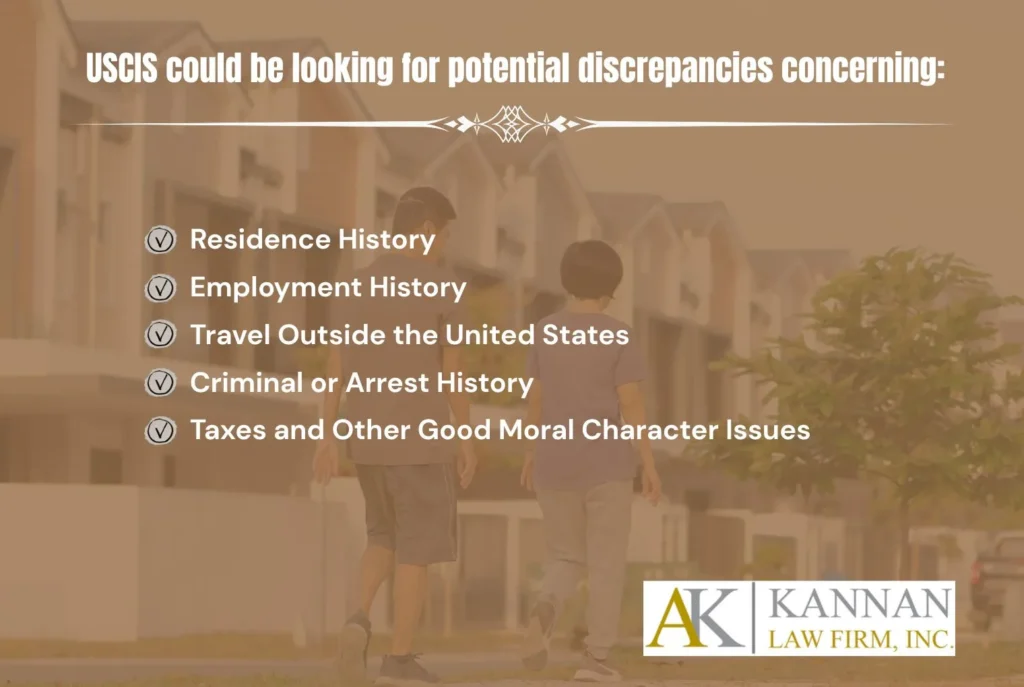
Potential issues may include discrepancies concerning:
Residence History
Naturalization applicants must establish continuous residence and physical presence in the United States.
An applicant who lists an address as his or her residence should be prepared to establish that the address accurately reflects where the applicant actually lived during the relevant period.
Employment History
The N-400 requires applicants to disclose employment and other activities during the applicable period.
Significant inconsistencies between the N-400 and other records may lead USCIS to ask additional questions.
Travel Outside the United States
Applicants must accurately disclose international travel. Extended absences can potentially affect continuous residence or physical presence requirements.
Criminal or Arrest History
Naturalization involves a good moral character determination. Applicants should carefully disclose arrests, citations, criminal charges, convictions, probation, and other matters when required—even when a case was dismissed or occurred many years ago.
Taxes and Other Good Moral Character Issues
USCIS may consider certain tax problems and other conduct when determining whether an applicant has established good moral character. Applicants with unresolved tax issues, prior false statements to government agencies, voting issues, selective service issues, or other potential good moral character concerns should consider obtaining legal advice before filing an N-400.
Could USCIS Talk to My Neighbors or Employer?
A neighborhood investigation may allow USCIS to obtain information from people who have knowledge about the applicant.
Depending on the circumstances, this could potentially include neighbors, employers, coworkers, business associates, or others familiar with the applicant.
That does not mean USCIS will contact these individuals in every case. The important point is that applicants should approach the N-400 with the understanding that USCIS may independently attempt to verify information rather than relying exclusively on the applicant’s testimony and supporting documents.
Does a Neighborhood Investigation Mean My Citizenship Application Is in Trouble?
Not necessarily.
The fact that USCIS conducts additional investigation does not automatically mean that an applicant will be denied citizenship.
Naturalization applicants have the burden of demonstrating that they satisfy the requirements for citizenship. An investigation is another tool USCIS may use to determine whether those requirements have been established.
However, an applicant who knows there are inconsistencies, omissions, or potentially negative facts in his or her immigration history should take those issues seriously. Attempting to conceal a problem can potentially create a much more serious naturalization issue than the underlying event itself.
Should I Submit Letters From Neighbors, Employers, or Other People?

Supporting evidence can be helpful in appropriate cases, particularly when an applicant needs to establish facts concerning residence, employment, good moral character, or other eligibility requirements.
Whether recommendation letters or declarations should be submitted depends on the individual case.
Submitting unnecessary evidence is not always advantageous. Before providing affidavits or recommendation letters, applicants with complicated immigration histories should consider whether the evidence is necessary and whether it is consistent with the applicant’s entire record.

Who Should Be Particularly Careful Before Filing an N-400?
The new USCIS policy makes a thorough review particularly important for applicants
who have:
- Prior arrests or criminal convictions;
- DUI convictions;
- Long trips outside the United States;
- Questions concerning continuous residence;
- Unpaid taxes or unfiled tax returns;
- Selective Service registration issues;
- Prior immigration violations;
- Prior removal or deportation proceedings;
- Different addresses appearing in government records;
- Prior statements or applications containing inaccurate information;
- Voting or voter-registration issues;
- Questions about whether permanent residence was lawfully obtained; or
- Any other issue that could affect good moral character or eligibility for citizenship.
In these situations, filing an N-400 without first reviewing the underlying issue may carry unnecessary risk.
USCIS May Review More Than the Last Five Years
Applicants frequently believe USCIS can only examine conduct occurring during the five-year good moral character period—or three years for certain applicants applying based on marriage to a U.S. citizen.
That assumption can be dangerous.
Although the statutory good moral character period is extremely important, USCIS may examine earlier conduct in determining an applicant’s present moral character and may also review an applicant’s immigration history to determine whether the person was lawfully admitted for permanent residence in the first place.
Naturalization can therefore result in USCIS examining immigration records that may be many years old.
What Should You Do Before Applying for Citizenship in 2026?
Applicants should not panic because of the new neighborhood investigation policy. Most importantly, they should prepare carefully.
Before filing an N-400, applicants should review their address history, employment history, international travel, tax records, criminal history, prior immigration applications, and any facts that could potentially affect good moral character or naturalization eligibility.
Applicants with complicated histories may also want to obtain their immigration records before applying.
The information provided on the N-400 should be truthful and consistent with the applicant’s history. If there is an error in a previous immigration filing, an applicant should obtain legal advice about how to address it rather than simply repeating the error on the naturalization application.
Speak With a San Diego Citizenship Lawyer Before Filing Your N-400
Becoming a United States citizen is one of the most important immigration benefits available to a lawful permanent resident. The recent USCIS changes do not mean eligible permanent residents should be afraid to apply for citizenship.
They do mean that applicants should take the process seriously.
With USCIS reinforcing neighborhood investigations and increasing its focus on verifying naturalization eligibility, applicants with complicated immigration histories should consider having their case reviewed before filing.
Our San Diego immigration law firm assists lawful permanent residents with citizenship and naturalization applications, including cases involving criminal history, travel issues, good moral character concerns, prior immigration violations, and other complicated N-400 issues.
Contact our office to schedule a consultation regarding your eligibility to apply for United States citizenship. At Kannan Law, we offer a free initial phone consultation. Call us at (619) 746-8879 or contact us through our website!
Frequently Asked Questions About USCIS Neighborhood Investigations
Will USCIS visit every citizenship applicant’s home?
No. USCIS has not announced a requirement that every N-400 applicant receive a home or neighborhood visit. Neighborhood investigations may be conducted on an individualized basis.
Can USCIS contact my neighbors during my citizenship application?
Potentially. A neighborhood investigation may involve USCIS seeking information from individuals who have knowledge about the applicant or facts relevant to naturalization eligibility.
Can USCIS contact my employer?
Potentially. USCIS may investigate information relevant to an applicant’s employment history or naturalization eligibility when the agency determines additional verification is appropriate.
When did the new USCIS citizenship policy take effect?
USCIS issued Policy Alert PA-2026-10 on August 25, 2026. The guidance addresses investigations and examinations used to determine naturalization eligibility.
Should I be worried about applying for citizenship because of the new policy?
An applicant who meets the requirements for naturalization should not assume that the new policy prevents him or her from applying. However, applicants with criminal records, immigration violations, lengthy travel, tax issues, inconsistencies in previous applications, or other potential eligibility concerns should consider consulting an immigration attorney before filing.
Can USCIS investigate information that is not on my N-400?
USCIS’s naturalization examination is not necessarily limited to simply reviewing the answers appearing on Form N-400. USCIS conducts background and security checks and may examine information and documentation relevant to determining whether the applicant satisfies the requirements for naturalization.
What happens if USCIS discovers incorrect information on my N-400?
The consequences depend on the nature and significance of the incorrect information. An innocent mistake is different from intentionally providing false information. Applicants who discover an error should consider obtaining legal advice about how and when to correct it.